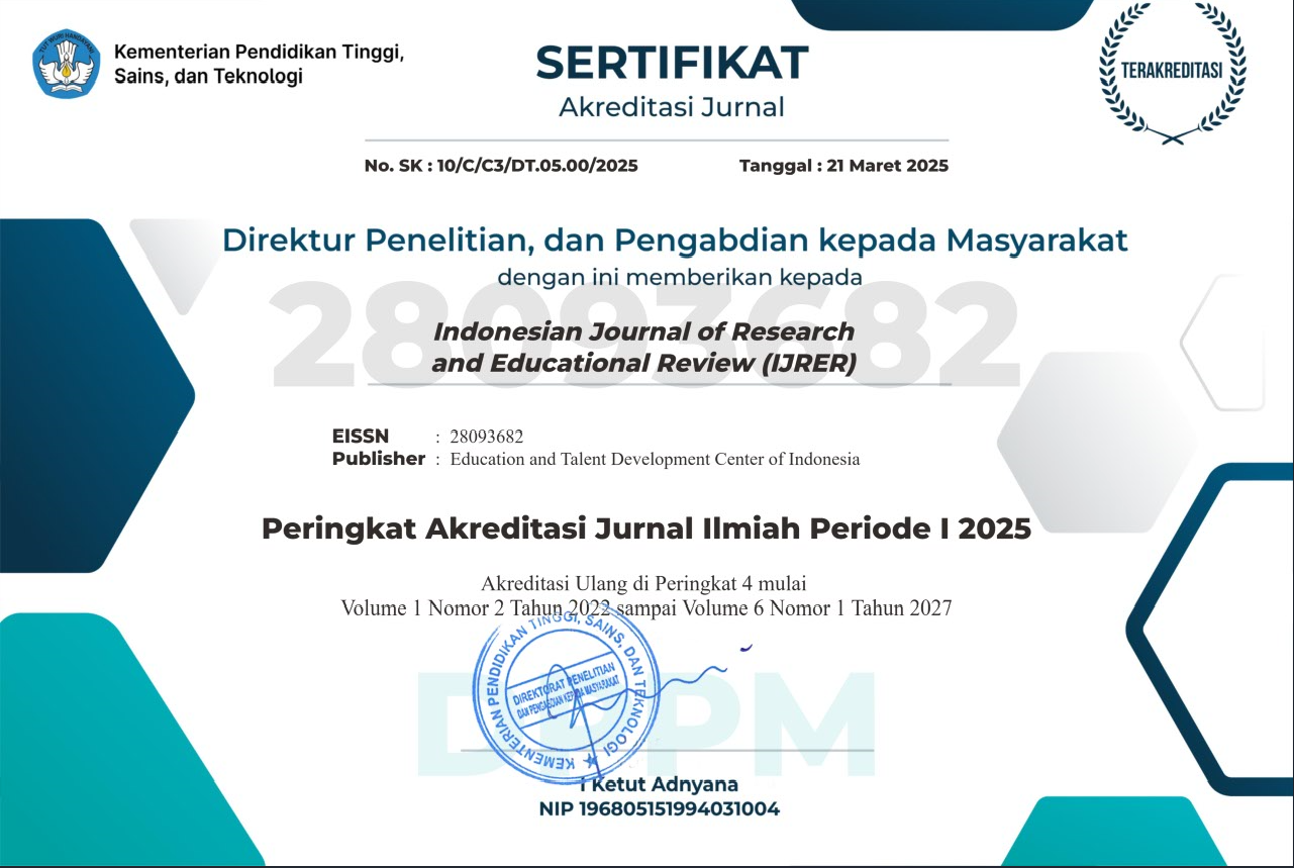
ACREDITATION
Character education is education to shape one's personality through character education, the results of which can be seen in one's real actions, namely good and honest behavior, being responsible, respecting the rights of others, hard work, and so on. Good character means knowing the good, loving the good, and doing the good. Contemporary Islamic thought generally makes episteme, reason, 'aqal, khitab, or paradigm, which is understood as the basis for the growth and development of science and tradition, the object of their thinking. This paper will present one of the efforts to improve character education in contemporary Islamic thought. It will namely present the concept of the leading philosophical thought, namely Ibn Sina, and its implications for today's Islamic education. Ibn Sina divides the level of scientific material that must be passed by students based on the stage of development and age of the child's growth into, among others, Ages 3 (three) to 5 (five) Years, Ages 6 (six) to 14 (fourteen) Years, and Ages 14 (fourteen) and Over.
Irmansyah, I., & Andi Maryam Azis. (2021). Character Education in Contemporary Islamic Thinking. ETDC: Indonesian Journal of Research and Educational Review , 1(1), 93–99. https://doi.org/10.51574/ijrer.v1i1.171
Downloads
Download data is not yet available.
- Ainissyifa, H. (2017). Pendidikan Karakter dalam Perspektif Pendidikan Islam. Jurnal Pendidikan UNIGA, 8(1), 1-26. http://dx.doi.org/10.52434/jp.v8i1.68
- Ainiyah, N., & Wibawa, N. H. H. P. (2013). Pembentukan karakter melalui pendidikan agama Islam. Al-Ulum, 13(1), 25-38. https://www.journal.iaingorontalo.ac.id/index.php/au/article/view/179
- Al Hamdani, D. (2016). The character education in Islamic education viewpoint. Jurnal Pendidikan Islam UIN Sunan Gunung Djati, 1(1), 98-109.
- Berkowitz, M. W., & Grych, J. H. (2000). Early character development and education. Early Education and Development, 11(1), 55-72. https://doi.org/10.1207/s15566935eed1101_4
- Berkowitz, M. W., & Bier, M. C. (2005). What works in character education: A research-driven guide for educators. Washington, DC: Character Education Partnership.
- Berkowitz, M. W., & Schwartz, M. (2006). Character education. Children’s needs III: Development, prevention, and intervention, 15-27.
- Budihardjo, B. (2017). The Character Education Values In Qur’anic Verses. Profetika: Jurnal Studi Islam, 17(02), 93-112. https://doi.org/10.23917/profetika.v17i02.5301
- Daun, H., & Arjmand, R. (Eds.). (2018). Handbook of Islamic education. Springer. https://link.springer.com/content/pdf/10.1007%252F978-3-319-64683-1.pdf
- Fathurrahman, M. (2016). Pendidikan Karakter Dalam Perspektif Pendidikan Islam. EDUKASI: Jurnal Pendidikan Islam (e-Journal), 4(1), 1-25. https://staim-tulungagung.ac.id/ejournal/index.php/edukasi/article/view/188
- Ghazal, A. N. (2010). Islamic reform and Arab nationalism: expanding the crescent from the Mediterranean to the Indian Ocean (1880s-1930s). Routledge.
- Gunawan, I., & Gunawan, I. (2019). Develop Educational Leadership by Applying Values and Ethics to Strengthen Student Character. In 5th International Conference on Education and Technology (ICET 2019). Atlantis Press.
- Halstead, M. (2004). An Islamic concept of education. Comparative education, 40(4), 517-529. https://doi.org/10.1080/0305006042000284510
- Haris, A. H. (2017). Pendidikan karakter dalam perspektif Islam. Al-Munawwarah: Jurnal Pendidikan Islam, 9(1), 64-82. http://ejournal.kopertais4.or.id/sasambo/index.php/munawwarah/article/view/3296
- Huda, S. (2018). Struktur Pemikiran dan Gerakan Islam Kontemporer. Al-Tahrir: Jurnal Pemikiran Islam, 18(1), 153-173. https://jurnal.iainponorogo.ac.id/index.php/tahrir/article/view/1199
- Ibrahim, A. (2012). Contemporary Islamic thought: A critical perspective. Islam and Christian–Muslim Relations, 23(3), 279-294. https://doi.org/10.1080/09596410.2012.676781
- Ilham, D. (2020). The Challenge of Islamic Education and How to Change. International Journal of Asian Education, 1(1), 09-20.
- Ismail, I. (2016). Character education based on religious values: an Islamic perspective. Ta'dib: Jurnal Pendidikan Islam, 21(1), 41-58. https://doi.org/10.19109/td.v21i1.744
- Jamaluddin, D. (2013). Character education in Islamic perspective. International Journal of Scientific & Technology Research, 2(2), 187-189.
- Kamaruddin, S. A. (2012). Character education and students social behavior. Journal of Education and Learning, 6(4), 223-230.
- Khaidir, E., & Suud, F. M. (2020). Islamic education in forming students' characters at as-shofa Islamic High School, pekanbaru Riau. International Journal of Islamic Educational Psychology, 1(1), 50-63.
- https://doi.org/10.18196/ijiep.1105
- Lapidus, I. M. (2001). Between universalism and particularism: the historical bases of Muslim communal, national, and global identities. Global Networks, 1(1), 37-55. https://doi.org/10.1111/1471-0374.00004
- Latief, S., Sari, Y. A., Yusuf, M., Armila, A., & Hidayat, R. E. (2021). The Development of Islamic Education and Strengthening of National Education System of Indonesia. International Journal on Advanced Science, Education, and Religion, 4(2), 86-99. https://doi.org/10.33648/ijoaser.v4i2.105
- Lavy, S., & Benish-Weisman, M. (2021). Character Strengths as “Values in Action”: Linking Character Strengths With Values Theory–An Exploratory Study of the Case of Gratitude and Self-Transcendence. Frontiers in Psychology, 12, 202. https://doi.org/10.3389/fpsyg.2021.576189
- Muslih, M. (2012). Pemikiran Islam Kontemporer, Antara Mode Pemikiran dan Model Pembacaan. TSAQAFAH, 8(2), 347-368. http://dx.doi.org/10.21111/tsaqafah.v8i2.28
- Negara, A. H. S. (2020). Religious Character as the Main Base of Education in Indonesia. In 1st Borobudur International Symposium on Humanities, Economics and Social Sciences (BIS-HESS 2019) (pp. 269-271). Atlantis Press.
- Pohl, F. (2006). Islamic education and civil society: Reflections on the pesantren tradition in contemporary Indonesia. Comparative Education Review, 50(3), 389-409. https://www.journals.uchicago.edu/doi/abs/10.1086/503882?journalCode=cer
- Putra, A. T. A. (2016). Pemikiran Filosofis Pendidikan Ibnu Sina dan Implikasinya pada Pendidikan Islam Kontemporer. LITERASI (Jurnal Ilmu Pendidikan), 6(2), 191-201. http://dx.doi.org/10.21927/literasi.2015.6(2).191-201
- Sahlan, A. (2012). Pendidikan Karakter dalam Perspektif Islam (Kajian Penerapan Pendidikan Karakter di Lembaga Pendidikan Islam). el-hikmah, (2). http://ejournal.uin-malang.ac.id/index.php/elhikmah/article/view/2261
- Sanaky, H. A. (2017). The Role Of Religious Education In Forming Tolerant Individuals. Indonesian Journal of Interdisciplinary Islamic Studies, 1(1), 77-89. https://doi.org/10.20885/ijiis.vol1.iss1.art4
- Sinanović, E. (2012). Islamic revival as development: discourses on Islam, modernity, and democracy since the 1950s. Politics, Religion & Ideology, 13(1), 3-24. https://doi.org/10.1080/21567689.2012.659500
- Singh, B. (2019). Character education in the 21st century. Journal of Social Studies (JSS), 15(1), 1-12. https://doi.org/10.21831/jss.v15i1.25226
- Suriyadi, S., Jamin, A., & Musdizal, M. (2021). The Integrative Education: The Vision of Character Education Based on Al-Qur’an. AL QUDS: Jurnal Studi Alquran dan Hadis, 5(1), 249-262. http://dx.doi.org/10.29240/alquds.v5i1.2006
- Van Bruinessen, M. (2013). 1. Introduction: Contemporary Developments in Indonesian Islam and the “Conservative Turn” of the Early Twenty-first Century. In Contemporary Developments in Indonesian Islam (pp. 1-20). ISEAS Publishing. https://doi.org/10.1355/9789814414579-005
Copyright (c) 2021 ETDC: Indonesian Journal of Research and Educational Review

This work is licensed under a Creative Commons Attribution-ShareAlike 4.0 International License.
Similar Articles
- Kharence Grell Laquiao Dagson, Analysis of Tertiary Learners’ Writing Errors through Surface Strategy Taxonomy , ETDC: Indonesian Journal of Research and Educational Review : Vol. 5 No. 2 (2026): March
- Jonalyn B. Calis, Rebecca D. Ngolab, Sherilyn B. Pablo, Angel Faith B. Saysayap, John Rey O. Pelila, Effective Strategies for Listening Comprehension: A Focus on Asia , ETDC: Indonesian Journal of Research and Educational Review : Vol. 4 No. 4 (2025): September
- Besse Sulfiani, The Effect of Increasing the Leadership of School Principals on the Performance of Education Staff in Wajo District , ETDC: Indonesian Journal of Research and Educational Review : Vol. 2 No. 1 (2022): December
- Sulaeman Sulaeman, Sarman Nuhung, A Multicultural Education Model for Understanding Child Legitimacy: Harmonization of Family Law and Bugis Customary Law , ETDC: Indonesian Journal of Research and Educational Review : Vol. 4 No. 4 (2025): September
- Zakia Min Fadlillah, Eti Hadiati, Sela Kholidiani, Excellent Classroom Management: Strategies for Improving Academic and Non-Academic Achievement at Islamic Junior High School , ETDC: Indonesian Journal of Research and Educational Review : Vol. 5 No. 3 (2026): June
- Nurul Fachriyah, Abdul Wahid, Syarifah Nur Fajrin, Self-Directed Learning Model: Communication, Collaboration, Critical Thinking, Creativity (4C) Skills for Elementary School Students , ETDC: Indonesian Journal of Research and Educational Review : Vol. 5 No. 3 (2026): June
- Siti Jamila, Wahyu Lestari, Ahmad Ilzamul Hikam, Liberal Feminism in Novel Broken Strings and Its Relevance to Indonesian Language Learning in Madrasah Aliyah , ETDC: Indonesian Journal of Research and Educational Review : Vol. 5 No. 4 (2026): September
- Iqbal Nasir, Muhyiddin Tahir, Baso Akbar, Leadership Style of the Head of Religious Affairs Office in Fostering Employee Discipline: An Islamic Education Perspective , ETDC: Indonesian Journal of Research and Educational Review : Vol. 3 No. 2 (2024): March
- Dwi Andini Putri , Agung Setia Batubara, Deep Learning-Enhanced Discovery Learning: Impact on High School Students' Environmental Change Outcomes , ETDC: Indonesian Journal of Research and Educational Review : Vol. 6 No. 1 (2026): September - December
- Musdalifah Musdalifah, Integrating English Language and History Learning Through Visual Arts at Primary School , ETDC: Indonesian Journal of Research and Educational Review : Vol. 5 No. 1 (2025): December
<< < 15 16 17 18 19 20 21 22 23 24 > >>
You may also start an advanced similarity search for this article.
Dimension Badge
Crossmark Badge

Section
Articles
Keywords