Analysis of Sharia and Aqidah Values in the Ngejalang Tradition as a Source of Learning in Islamic Religious Education

https://doi.org/10.51574/ijrer.v5i3.4912
Keywords:
Aqidah Values, Islamic Religious Education, Learning Resources, Ngejalang Tradition, Sharia ValuesAbstract
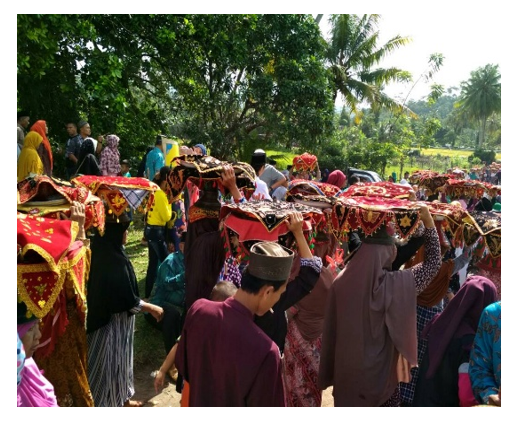
This research is driven by the urgent need to explore Islamic Religious Education (PAI) learning resources rooted in local wisdom, specifically focusing on the integrative acculturation within the Ngejalang tradition of the Lampung Saibatin community in Pekon Gunung Kemala Timur. Amidst modernization, this tradition persists as a vital cultural identity containing significant educational content, yet it faces the risk of shifting meanings if not formally reconstructed as scientific learning material. Consequently, this study aims to analyze the fundamental values of faith, sharia, and morals within the Ngejalang tradition to position it as a contextual PAI resource. Employing a descriptive qualitative method with an ethnopedagogical approach, primary data was gathered through participant observation and in-depth interviews, utilizing interactive analysis to examine Ngejalang as 'urf sahih’ (sound custom). The findings reveal that Ngejalang represents a unique manifestation of acculturation that transforms pilgrimage rituals into instruments for strengthening the pillars of Islam. Faith is internalized through the concept of tauhid via tadzkiratul maut (remembrance of death), while sharia values are implemented through the principle of al-'aadatu muhakkamah, where Islamic law serves as an active filter for ritual processes. Furthermore, moral values are reflected in a "character laboratory" that fosters ta'dzim (respect), generosity, and social cohesion. Ultimately, this study confirms that the Ngejalang tradition holds strong relevance as an ethnopedagogical PAI source, successfully integrating cognitive, affective, and psychomotor domains to internalize divine values and religious character while maintaining the absolute purity of monotheism.
References
Afandi, A. J. (2023). Islam and local culture: the acculturation formed by Walisongo in Indonesia. Indonesian Journal of Humanities and Social Sciences, 4(1), 103-124. https://doi.org/10.33367/ijhass.v4i1.4135
Azzahra, F., Mulyani, M., & Binarsae, A. (2025). Acculturation of Islamic Teachings and Local Customs: A Sociological Study on the Nyadran Tradition in Java. SMART: Journal of Sharia, Traditon, and Modernity, 13-24. https://doi.org/10.24042/f16gp058
Fanshurna, T., & Isnadi, I. (2025). Religious Moderation in Minority Muslim Community Interactions: A Talcott Parsons Structural Functionalist Approach. Eduvest-Journal of Universal Studies, 5(9), 10679-10692. https://doi.org/10.59188/eduvest.v5i9.52097
Fauzan, A. (2025). The transformation of traditional culture in responding to the challenges of globalization in local Indonesian Communities. The Journal of Academic Science, 2(3), 1021-1030. https://thejoas.com/index.php/thejoas/article/view/306
Hakim, R. M. (2022). Tradisi Ngejalang di Pekon Penggawa V Tengah Kecamatan Karya Penggawa Kabupaten Pesisir BARAT. http://digilib.unila.ac.id/id/eprint/59868
Hardi, P. C. S. (2018). Reprsentasi Nilai-Nilai Karakteristik Tradisi Ngejalang Dalam Kearifan Lokal Masyarakat Lampung Saibatin Pekon Negeri Ratu Kecamatan Ngambur Kabupaten Pesisir Barat (Doctoral dissertation, UIN Raden Intan Lampung). https://repository.radenintan.ac.id/id/eprint/4204
Khoiruddin, K. (2023). Moderasi Beragama Dalam Kearifan Lokal Pada Masyarakat Pesisir Barat Provinsi Lampung: Moderasi Beragama Dalam Kearifan Lokal Pada Masyarakat Pesisir Barat Provinsi Lampung. MODERATIO: Jurnal Moderasi Beragama, 3(1), 76-91. https://doi.org/10.32332/moderatio.v3i1.5865
Khulwah, J., Nurkholidah, S., & Muhammad, H. (2024). The Tradition Ngejalang As a Basis for Moderation in Religious Practices in Lampung. International Journal of Community Engagement Payungi, 4(2), 82-94. https://doi.org/10.58879/ijcep.v4i2.55
Kurniawan, H. (2023). Batik Pahakh: The Transformation Of Tradisional Tool In The Ngejalang Ceremony Into Batik Pattern. CAIJ: Creative Arts Interdisciplinary Journal, 3(1). https://doi.org/10.26742/caij.v3i1.2732
Mutia, A. N. (2023). Islam dan Kearifan Lokal Lampung (Studi Atas Nilai-Nilai Islam pada Tradisi Ngejalang Masyarakat Lampung Saibatin) (Doctoral dissertation, UIN Raden Intan Lampung). https://repository.radenintan.ac.id/23412/
Nafisah, I., & Riadi, H. (2025). The Concept of Morality, Ihsan and Ta'dib in the Formation of Islamic Character and Malay Culture. Lentera Pendidikan: Jurnal Ilmu Tarbiyah dan Keguruan, 28(1), 217-227. https://doi.org/10.24252/lp.2025v28n1i12
Ngaliman, S. E., Nisa, D. K., Ilham, N. A., & Bistara, R. (2025). Jaringan Ulama Nusantara Dengan Kawasan Islam Internasional: Pemikiran, Keilmuan, Sanad, Dan Kiprah Bagi Islam. Tamaddun: Jurnal Kebudayaan dan Sastra Islam, 25(02), 40-52. https://doi.org/10.19109/tamaddunuinradenfatah.v25i02.32748
Ningrum, L. P., & Abdullah, T. (2025). Negotiating modernization in village tourism amidst efforts to preserve traditional culture. Journal of Heritage Tourism, 20(5), 661-682. https://doi.org/10.1080/1743873X.2025.2515873
Nopia, E., Anwar, C., & Kesuma, G. C. (2022). Internalisasi Nilai Pendidikan Islam Berbasis Kearifan Lokal: Analisis Praktik Tradisi Ngejalang Kubokh dalam Pembentukan Sikap Sosial dan Religius Masyarakat. Fitrah: Journal of Islamic Education, 3(2), 160-175. https://doi.org/10.53802/fitrah.v3i2.168
Ormerod, R. (2020). The history and ideas of sociological functionalism: Talcott Parsons, modern sociological theory, and the relevance for OR. Journal of the Operational Research Society, 71(12), 1873-1899. https://doi.org/10.1080/01605682.2019.1640590
Pohan, R. A., Ramli, M., Atmoko, A., Akbar, S. D., & Hanurawan, F. (2025). Unveiling gratitude in Javanese Muslim hajatan traditions: Cultural wisdom and social cohesion in the midst of modernization. Social Sciences & Humanities Open, 11, 101321. https://doi.org/10.1016/j.ssaho.2025.101321
Putra, D., Nasution, M., & Edi, S. (2025). Reviving the Past: The Role of Sharia in Preserving Forgotten Customs within Islamic Culture. Al-Rasῑkh: Jurnal Hukum Islam, 14(1), 30-50. https://doi.org/10.38073/rasikh.v14i1.2367
Putriany, P., Aderus, A., & Syamsuddin, D. (2025). Menghubungkan Dua Tradisi: Model Dakwah Islam Nusantara dan Islam Kemajuan. Nusantara; Journal for Southeast Asian Islamic Studies, 21(1), 102-113. http://dx.doi.org/10.24014/nusantara.v21i1.35523
Sanjani, M. A. F., Zain, B., & Mustofa, M. L. (2024). Islam and Local Wisdom: Integration of Local Values in Islamic Thought. Journal of Social Studies and Education, 2(2), 94-110. https://doi.org/10.61987/jsse.v2i2.567
Sari, E. P., Budijanto, B., & Susilo, S. (2020). The meaning of Sekura Cakak Buah tradition of Saibatin community. Jurnal Pendidikan Humaniora, 8(2), 5. https://doi.org/10.17977/2442-3890.1101
Sulistyarini, R., Budiono, A. R., Winarno, B., & Koeswahyono, I. (2018). The contact point of customary law and Islamic law (legal history perspective). International Journal of Social Sciences and Management, 5(2), 51-59. https://nepjol.info/index.php/IJSSM/article/view/19672
Suhernawati, S., Riadi, H., Rusnawati, R., & Jamiatussoleha, S. (2024). Integration of Aqidah-Tauhid and Islamic Character Based on Malay Local Wisdom in Islamic Religious Education. Belajea: Jurnal Pendidikan Islam, 9(2), 161-180. https://doi.org/10.29240/belajea.v9i2.13012
Thahir, A. (2023). The need for a comprehensive approach: Integrating multiculturalism and national identity in Indonesian education. British Journal of Philosophy, Sociology and History, 3(1), 11-16. https://doi.org/10.32996/pjpsh.2023.3.1.3
Toha, M., Zuana, M. M. M., & Isbahi, M. B. (2024). Acculturation of Mataraman Local Wisdom with Islamic Values: Implications for Social and Economic Development. Danadyaksa: Post Modern Economy Journal, 2(1), 33-47. https://doi.org/10.69965/danadyaksa.v2i1.143
Wahyudi, D., & Handayana, S. (2026). Integrative Islamic Education Model Based on Gayo Cultural Wisdom. Jurnal Iqra': Kajian Ilmu Pendidikan, 11(1), 320-335. https://doi.org/10.25217/ji.v11i1.7085
Wardi, U., Fahmi, K., & Amin, S. (2023). The Relationship Between Religious Law and State Law: Analytical Study of Receptio and Electicism Theories. Hakamain: Journal of Sharia and Law Studies, 2(2), 186-195. https://doi.org/10.57255/hakamain.v2i2.326
Downloads
Published
How to Cite
Issue
Section
License
Copyright (c) 2026 Dwi Purwanto, Yuberti Yuberti, Devi Sela Eka Selvia

This work is licensed under a Creative Commons Attribution-ShareAlike 4.0 International License.