Media Quizizz-Based Learning Media Using Lubuklinggau Tourism Context to Improve Students’ Understanding of Mathematical Concepts

https://doi.org/10.51574/kognitif.v6i3.5822
Keywords:
Indonesian Realistic Mathematics Education (PMRI), Lubuklinggau tourism context, Quizizz, Understanding of Mathematical ConceptsAbstract
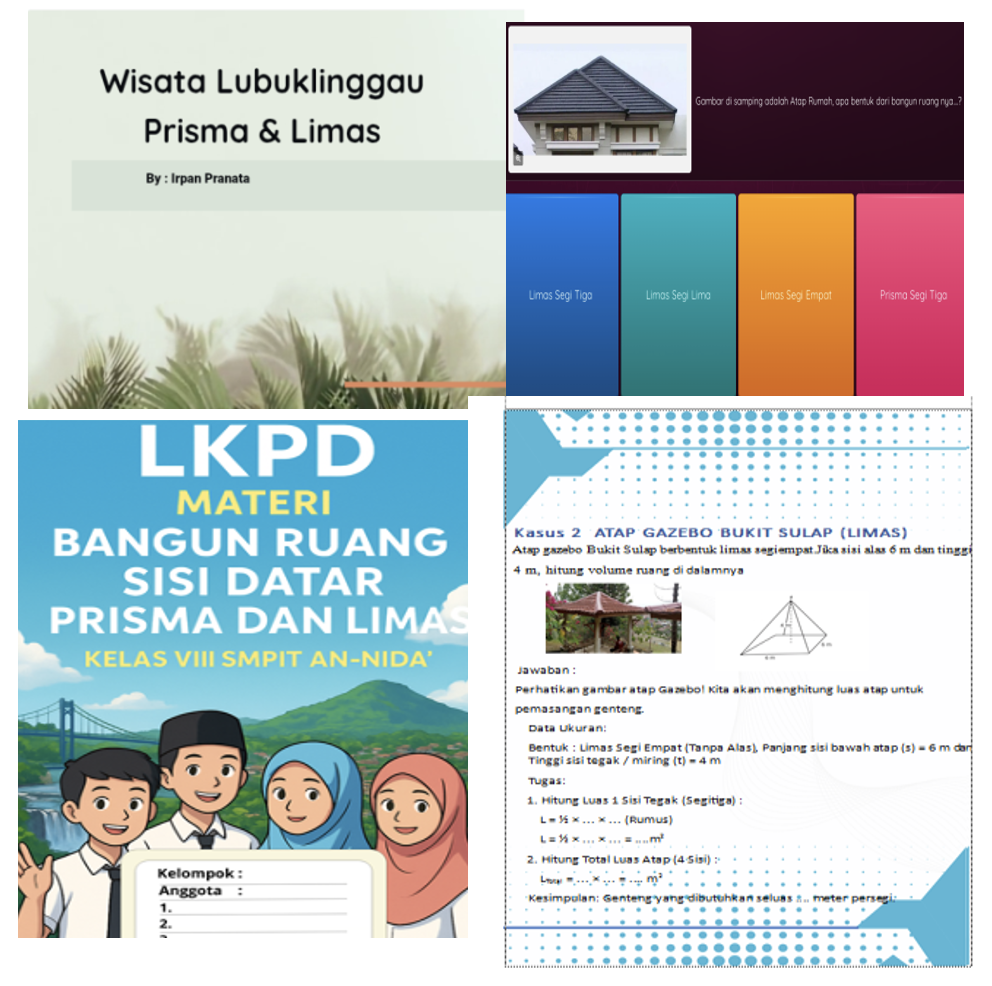
Understanding mathematical concepts is a fundamental ability that students need in order to explain, connect, and apply them in various situations. However, students still experience difficulties in linking the concepts of flat-sided three-dimensional shapes, specifically prisms and pyramids, to contextual problems. This study aims to analyze changes in students' understanding of mathematical concepts before and after learning using the Indonesian Realistic Mathematics Education (PMRI) approach assisted by Quizizz in the context of Lubuklinggau tourism. The study used a quantitative approach with a pre-experimental one-group pretest-posttest design. The study population consisted of 142 eighth-grade students at SMPIT An-Nida Lubuklinggau in the 2025/2026 academic year, with a sample of 29 students from class VIII.3. The research instrument was a set of five essay questions developed based on six indicators of conceptual understanding. The instrument had been tested for validity and reliability. The learning process integrated PMRI, Quizizz, and Student Worksheets (LKPD) using the context of Watervang and Bukit Sulap on prism and pyramid topics. Data were analyzed using descriptive statistics, normality tests, and the Wilcoxon signed-rank test at a significance level of 5%. The mean conceptual understanding score increased from 32.06 on the pretest to 48.27 on the posttest, with a difference of 16.21 points. The Wilcoxon signed-rank test results showed a significant difference between pretest and posttest scores (Z = 3.29; p < 0.001). These findings indicate that Quizizz-assisted PMRI learning with the context of Lubuklinggau tourism has the potential to support students' understanding of mathematical concepts in topics on prisms and pyramids.
Downloads
References
Abi, A. M., Lenamah, A. S., & Babys, U. (2022). Analisis Kemampuan Pemahaman Konsep Matematis Siswa SMP Negeri Siso. Didactical Mathematics, 4(2), 294–301. https://doi.org/10.31949/dm.v4i2.2334
Adha, I., Zulkardi, Putri, R. I. I., & Somakim. (2024). A Learning Trajectory for Surface Area Concept with the Context of the Tourist Destination Bukit Sulap. Mathematics Education Journal, 18(3), 409–430. https://doi.org/10.23107/jpm.v18i3.pp409-430
Arikunto, S. (2014). Prosedur penelitian: Suatu pendekatan praktik (Rev. ed.). Rineka Cipta.
Arsyad, A. (2020). Media pembelajaran (Rev. ed.). PT RajaGrafindo Persada.
Gulo, D. R. S., Mendrofa, N. K., Zega, Y., & Lase, S. (2024). Pengaruh model pembelajaran Realistic Mathematic Education (RME) terhadap kemampuan berpikir kritis dan self-efficacy siswa. Kognitif: Jurnal Riset HOTS Pendidikan Matematika, 4(3), 1378–1390. https://doi.org/10.51574/kognitif.v4i3.2003
Halawa, F., Telaumbanua, Y. N., Harefa, A. O., & Mendrofa, R. N. (2025). Analisis Kemampuan Pemahaman Konsep Matematis Siswa Pada Pembelajaran Matematika. Kognitif: Jurnal Riset HOTS Pendidikan Matematika, 5(1), 1–10. https://doi.org/10.51574/kognitif.v5i1.2625
Kandaga, T. (2024). Pemahaman konsep matematika siswa MTs dalam model Discovery Learning berbantuan aplikasi Quizizz. Kognitif: Jurnal Riset HOTS Pendidikan Matematika, 4(1), 57–67. https://doi.org/10.51574/kognitif.v4i1.1221
Marleny, A. S., Zulkardi, Z., Putri, R. I. I., & Hartono, Y. (2025). Contextual Numeracy Learning in Tourism: A Systematic Literature Review and Its Implications for the Muara Enim Context. Mosharafa: Jurnal Pendidikan Matematika, 14(3), 583–600. https://doi.org/10.31980/mosharafa.v14i3.3509
Nisa, F. Z., & Rayungsari, M. (2024). Jurnal Pendidikan Matematika Jurnal Pendidikan Matematika. Jurnal Pendidikan Matematika, 2(3), 41–60. https://ejournal.unsri.ac.id/index.php/jpm
Nugroho, K. U. Z., Widada, W., Zamzaili, & Herawaty, D. (2019). Pemahaman Konsep Matematika melalui Media Youtube dengan Pendekatan Etnomatematika. JPMR: Jurnal Pendidikan Matematika Raflesia, 04(01), 96–106. https://ejournal.unib.ac.id/index.php/jpmr
Palengka, I., Tappi, T., Angela, A., Friska, S., Sumule, Y., & Pudi, Y. (2024). Penerapan model pembelajaran Realistic Mathematics Education (RME) untuk meningkatkan pemahaman konsep geometri. Kognitif: Jurnal Riset HOTS Pendidikan Matematika, 4(1). https://doi.org/10.51574/kognitif.v4i1.2073
Ratnasari, D. T., & Ruiyat, S. A. (2025). Implementation of the Blended Cycle Learning Model to Increase Elementary School Students’ Interest in Learning. JTP - Jurnal Teknologi Pendidikan, 27(2), 397–406. https://doi.org/10.21009/jtp.v27i2.59095
Resta, R. G., & Kodri, S. (2024). Analisis penerapan media pembelajaran berbasis digital dalam meningkatkan minat belajar siswa. JDPP: Jurnal Dinamika Pendidikan Pengajaran, 12(1), 1105–1121. https://doi.org/10.21009/jdpp.v12i1
Risdiana, Y. E., Sasomo, B., & Mashuri, A. (2025). Efektivitas Pendekatan Kontekstual Bermuatan Kearifan Lokal terhadap Hasil Belajar Matematika Siswa. Jurnal Pendidikan Matematika Dan Sains, 13(1), 140–148. https://doi.org/10.21831/jpms.v13i1.84578
Rosa, N. N. (2022). Efektivitas penggunaan media pembelajaran interaktif berbasis game untuk meningkatkan motivasi belajar siswa. Jurnal Basicedu, 6(2), 2738–2746. https://doi.org/10.31004/basicedu.v6i2.2467
Sadieda, U., & Avivah, N. (2024). Penerapan Media Interaktif Quizizz Untuk Barisan Dan Deret Aritmetika. ELIPS: Jurnal …, 5(September), 232–241. https://journal.unpacti.ac.id/index.php/ELIPS/article/view/1429%0A
Salam, M. Y., Mudinilllah, A., & Agustina, A. (2022). Aplikasi Quizizz Berpengaruh Atau Tidak untuk Meningkatkan Motivasi Belajar dan Hasil Belajar Siswa. Jurnal basicedu, 6(2), 2738-2746. https://doi.org/10.31004/basicedu.v6i2.2467
Sari, A., & Yuniati, S. (2018). Penerapan Pendekatan Realistic Mathematics Education (Rme) Terhadap Kemampuan Pemahaman Konsep Matematis. Jurnal Cendekia : Jurnal Pendidikan Matematika, 2(2), 71–80. https://doi.org/10.31004/cendekia.v2i2.49
Shofiyuddin, A., Choiri, M., Setiawan, F., Utsman, A. F., & Azmi, A. R. (2025). Enhancing Distance Learning through Immersive Technologies: Integration of Augmented and Virtual Reality in Higher Education. Journal of Islamic Education Research, 6(2), 244–259. https://doi.org/10.35719/jier.v6i2.481
Sugiyono. (2022). Metode penelitian kuantitatif, kualitatif, dan R&D (27th ed.). Alfabeta.
Sukasno, Zulkardi, Putri, R. I. I., & Somakim. (2024). Desain Pembelajaran Pecahan Menggunakan Konteks Bendungan Watervang. Jurnal Pendidikan Matematika RAFA, 10(1), 12–22. https://doi.org/10.19109/jpmrafa.v10i1.20595
Suryawan, I. P. P., & Permana, D. (2020). Geogebra dan pemahaman konsep. Prisma, 9(1), 108–117. https://doi.org/10.26877/prisma.v9i1.5432
Susanto, A. (2021). Metode penelitian pendidikan (Rev. ed.). Pustaka Pelajar.
Syaifar, M., Humaira, M., & Roza, Y. (2022). Analisis kemampuan pemahaman konsep matematis peserta didik pada materi bangun ruang sisi datar ditinjau dari gender. Jurnal Cendekia: Jurnal Pendidikan Matematika, 6(1), 519–532. https://doi.org/10.31004/cendekia.v6i1.1235
Trisyana, N., Triputra, D. R., & Setiyoko, D. T. (2025). Pemanfaatan aplikasi Quizizz sebagai media pembelajaran interaktif bagi siswa tingkat sekolah dasar. Pendas: Jurnal Ilmiah Pendidikan Dasar, 10(02), 405-415. https://doi.org/10.23969/jp.v10i02.25520
Wicaksono, U. A., Nugroho, M. Y. A., & Jumini, S. (2025). Pengaruh penggunaan media Quizizz terhadap motivasi belajar dan hasil belajar siswa dalam pembelajaran. Jurnal Sains Student Research, 3(6), 706–712. https://doi.org/10.61722/jssr.v3i6.6816
Wulandari, S., Bharata, H., & Undang Rosidin. (2023). Development of a Quizizz-Based Mathematics Learning Assessment Tools to Improve Students’ Concepts Understanding. Numerical: Jurnal Matematika Dan Pendidikan Matematika, 7(1), 71–84. https://doi.org/10.25217/numerical.v7i1.3103
Downloads
Published
How to Cite
Issue
Section
License
Copyright (c) 2026 This is an open-access under the CC-BY-SA license

This work is licensed under a Creative Commons Attribution-ShareAlike 4.0 International License.
Education and Talent Development Center of Indonesia (ETDC Indonesia)
e-mail: kognitif@gmail.com, website : https://etdc-indonesia.com

Kognitif: Jurnal Riset HOTS Pendidikan Matematika dengan Situs: https://etdci.org/journal/kognitif berlisensi Creative Commons Attribution-ShareAlike 4.0 International License






.png)